

Let me be honest with you. Choosing a land development company feels like it should be straightforward, but it rarely is.
You’ve got a vision for your project. Maybe it is a residential community you have been planning for years. Maybe it is a commercial space that your business badly needs. Or maybe you are an investor trying to turn a raw piece of land into something valuable. Whatever it is, you know what you want. The hard part is finding a team that can actually deliver it.
There are a lot of companies out there offering land development services. Some are excellent. Some will waste your time and money. And the tricky part is that they all sound pretty great on paper.
So here is what actually helps you tell the difference.
Know What You Are Looking For Before You Start Calling Around
This might sound obvious, but a lot of people skip this step and end up frustrated.
Before you reach out to anyone, sit down and get clear on your project. What kind of land are you working on? What do you want to build? Residential subdivision? A commercial strip? Mix-use development? How big is the site? What is your rough timeline?
When you walk into a conversation knowing your answers, you will spot pretty quickly whether a company has experience with your type of project or whether they are just nodding along hoping to win the contract.
A land development design company that knows your project type inside and out will ask you smarter questions. And smarter questions usually lead to better outcomes.
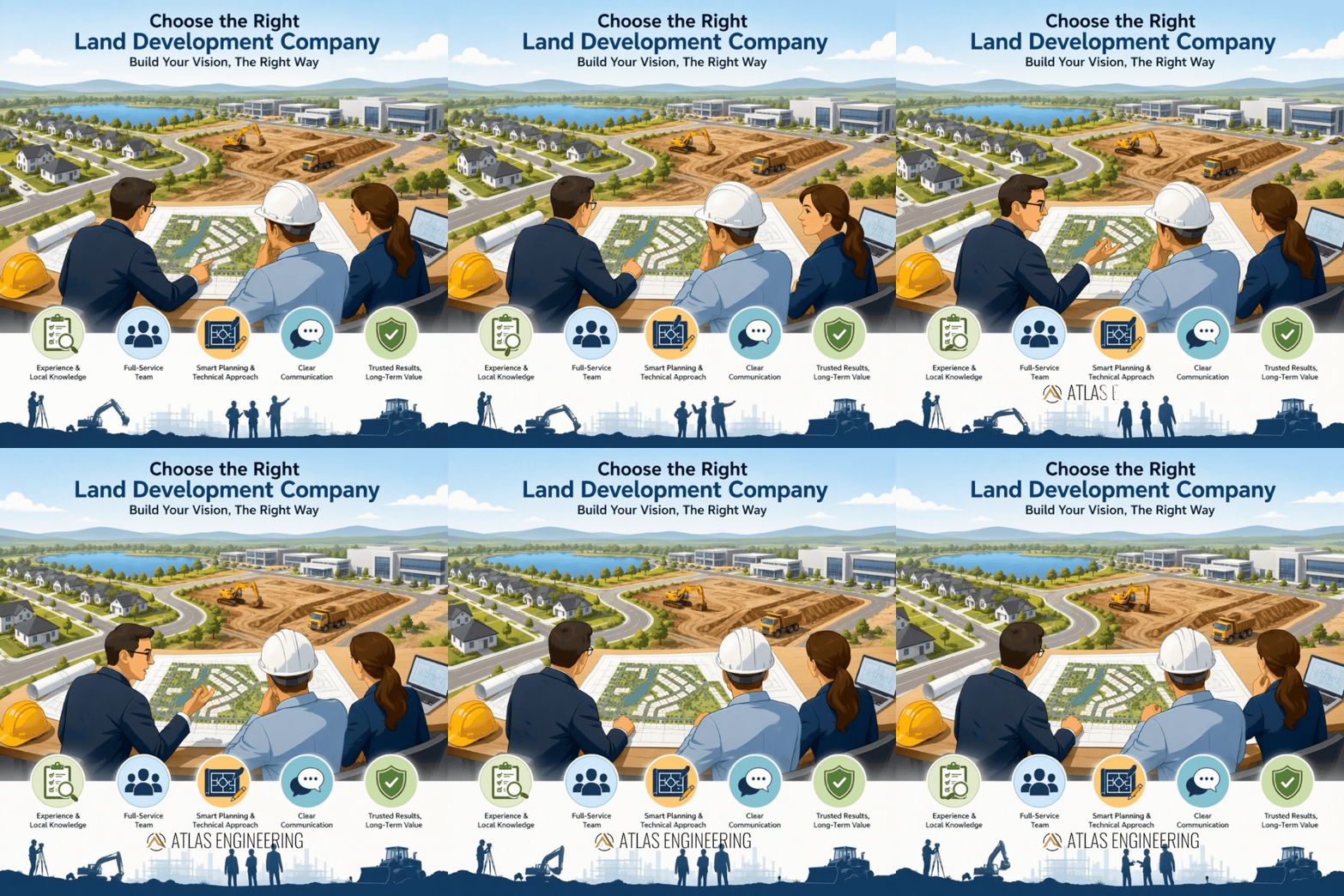
Experience Is Not Just a Number on Their Website
You will see a lot of firms boasting about how many years they have been in business. That is fine, but dig a little deeper.
What you really want to know is whether they have handled a project that looks like yours. Have they worked in your region? Do they understand the local permitting process, the soil conditions, the zoning quirks that can slow everything down if you are not prepared?
A land development design company that has worked in your area already knows which questions the municipality is going to ask. They know the process. That local knowledge saves you weeks of back and forth and sometimes a lot of money too.
Ask to see real examples of their past work. Not just polished portfolio photos. Ask how those projects went. What challenges came up? How did they handle them?
Find a Team That Handles the Full Picture
One thing a lot of first-time developers learn the hard way is that hiring separate firms for different parts of the project creates chaos. One team is waiting on another. Nobody agrees on who is responsible for a problem. The timeline stretches.
Good land development services cover the whole process under one roof. That means site evaluation, grading and drainage planning, utility coordination, permits, construction documents, and inspections.
When one team carries your project from start to finish, things stay consistent. Communication is simpler. And if something does not go as planned, there is no confusion about who needs to fix it.

Pay Attention to How They Talk to You
Here is something most people do not think about during the hiring process: how does this team actually communicate?
You are going to be working with these people for months. Maybe longer. When you call with a question, do they get back to you the same day? Do they explain things clearly, or do they bury you in technical jargon and move on? Do they tell you upfront when something is going to take longer than expected, or do you find out two weeks after it was supposed to be done?
These things matter a lot more than you might expect. A company that is easy to work with on a small question will also be easy to work with when there is a real problem. And in land development, there are almost always a few unexpected challenges along the way.
Ask About Their Technical Approach
This does not mean you need to become an expert in civil engineering software overnight. But it is worth asking how a company approaches the technical side of things.
Do they use modern tools for stormwater modeling and site grading? How do they handle situations where the soil conditions are not what they expected? What happens if there is an environmental issue on the site?
A strong team will answer these questions with confidence and in a way you can actually follow. If they get vague or defensive, that tells you something.
Talk to Their Past Clients
References are one of the most underused tools in this whole process. Companies will always give you their best examples, so do not just take the portfolio and walk away. Ask for references. Then actually call them.
Ask the past client whether the project came in on budget. Whether timelines were respected. Whether surprises were handled professionally or swept under the rug. Whether they would hire that team again without hesitation.
A five-minute phone call with a previous client will tell you more than an hour of reading company brochures.
Be Careful With Pricing That Seems Too Good
Nobody wants to overspend. That is completely fair. But in land development, a quote that comes in surprisingly low almost always means something is missing, whether that is scope, experience, or honesty about what the project actually requires.
Ask for a detailed cost breakdown. Understand what is included and what is not. A trustworthy company will walk you through their numbers without making you feel like you are asking too much.
Leading Engineering Services in Utah & Idaho
Considering Atlas Engineering for Your Next Project
If you are working through this process right now and wondering where to start, Atlas Engineering is a name worth having on your list.
They offer full-scope land development services for property owners, residential developers, commercial builders, and investors. Their team brings real experience in residential engineering as well as larger commercial and mixed-use projects, so they are not guessing when they sit down with you.
What tends to stand out about Atlas Engineering is that they take time to understand your specific goals before they start recommending solutions. They are not trying to fit your project into a template. They want to understand what success looks like for you and then figure out the most practical way to get there.
If you want a team that will be straight with you, stay with you through the process, and actually care how your project turns out, Atlas Engineering is the kind of partner worth reaching out to.
Frequently Asked Question
1. What exactly do land development services include?
Land development services cover everything it takes to get raw land ready for construction. That usually includes site assessments, soil testing, grading, drainage and storm water planning, utility coordination, and walking projects through the permitting process. Think of it as everything that happens before the building crew shows up.
2. How early should I bring in a land development design company?
As early as you possibly can. A lot of people wait until they feel like they have a solid plan, but involving a development company right at the start is actually what helps you build a solid plan. They can flag site issues, give you realistic cost estimates, and help you avoid decisions you would later regret.
3. What is residential engineering and why does it matter for my project?
Residential engineering is the technical work that goes into planning a housing development. Things like how the land gets graded, how lots are laid out, where utilities connect, and how rainwater gets managed. It is not glamorous, but getting it right is what keeps a residential project safe, functional, and compliant with local codes.
4. How long does the land development process take from start to finish?
It honestly depends on your project. A smaller residential job might move through the process in a few months. A larger commercial or mixed-use development can take a year or more, especially when permitting and environmental reviews are part of the picture. A good company will give you a realistic timeline early and keep you updated as things move along.
5. What should I bring to my first meeting with a land development company?
Bring your property details, any surveys or reports you already have, a rough idea of what you want to build, and your general budget range. You do not need to have everything figured out. The more context you can share, the more useful that first conversation will be. And honestly, the questions they ask you will help you figure out what you still need to think through.