Categories
Land development services

Land Development Services Explained: From Raw Land to Build-Ready Sites

A piece of land can look perfect and still be impossible to build on. This is something many landowners and developers learn the hard way. Just because land is empty does not mean it is ready.

Before construction can begin, the land has to be studied, planned, and prepared. That is what land development services are for. They turn land that cannot be built on into land that can.

This step is often invisible, but it is one of the most important parts of any project.
land development design company

What Land Development Services Really Cover

Land development services deal with everything that happens before construction. This includes how water drains, where roads go, how utilities connect, and how the land follows local rules.

A land development design company looks at the land as it is, not as people wish it were. Slopes, soil, access, and regulations all matter. Ignoring any of these usually leads to delays or redesigns later.

Good planning makes the rest of the project easier.

Who Uses Land Development Services

These services are used by people with very different goals, but they all face the same risks if planning is skipped.

Residential real estate developers depend on residential engineering to create neighborhoods that function properly. Municipal government officials rely on land development planning for public roads, drainage systems, and utilities. Commercial property owners need sites that support traffic, parking, and long-term use. Architects and contractors need accurate engineering plans, so construction stays on schedule. Private landowners often want to improve their land or prepare it for sale.

In every case, planning comes first.

Why This Step Is So Important?

Many land problems only show up once work begins. Poor drainage, unstable ground, or access issues can stop a project halfway through. Fixing those problems later costs time and money.

Land development services are meant to prevent that. Engineers look at stormwater flow, grading, and zoning requirements before construction starts. This helps avoid permitting issues, design changes, and unexpected site work.

It is much cheaper to plan correctly than to fix mistakes later.

How Raw Land Becomes Ready to Build

The process follows clear steps. Each one has a purpose.

Site Review

The first step is understanding the land. Soil conditions, slopes, flood zones, and nearby utilities are reviewed. This tells everyone what is possible and what is not.

Initial Planning

A basic site layout is created. This shows where buildings, roads, parking, and utilities may go. It helps catch problems early.

Engineering Design

Detailed plans are prepared for next. This includes grading plans, drainage systems, and utility connections. Residential engineering and industrial land development follow different standards, but both require precision.

Permits and Approvals

Plans are submitted for review. This part can take time. A land development design company helps manage changes and keeps communication clear.

Construction Support

During site work, engineers stay involved to ensure plans are followed, and issues are handled correctly.

Each step reduces risk before construction begins.

When to Start the Process

The earlier land development services begin, the better. Ideally, before land is purchased or before building plans are finalized. Early planning can reveal issues that affect cost, timeline, or even whether the project makes sense.

For existing landowners, proper planning often increases land value or opens new options for use.

Waiting usually creates problems.

Residential vs Industrial Land Development 

Residential engineering focuses on daily use. Streets, drainage, and utilities must support long-term living.

Industrial land development focuses on strength and capacity. Heavy vehicles, equipment, and higher utility demands require different planning.

Designing land for the wrong use causes issues later. Getting it right from the start matters.

Final Thoughts 

Land development services are not just formal. They are the foundation of a successful project. When land is prepared properly, construction runs smoother and fewer problems appear later.

If the goal is land that is safe, usable, and ready to build on, professional planning is essential.

For clear guidance, practical engineering, and steady support through every stage, Atlas Engineering helps turn raw land into build-ready sites.

Leading Engineering Services in Utah & Idaho

For 20 years, Atlas Engineering has been a leader in land development, structural, municipal, and surveying projects

Frequently Asked Questions

1. What do land development services actually take care of?

Land development services handle all the groundwork before construction starts. Things like drainage, road access, utilities, and local rules. Without this step, land that looks ready can turn into a costly problem once work begins.

2. When should a land development design company get involved?

Sooner is always better. A land development design company should be involved before land is purchased or before plans are finalized. Early planning helps catch issues that could affect cost, approvals, or even whether the project is possible.

3. Are residential engineering and industrial land development really different?

They are. Residential engineering focuses on everyday use—streets, drainage, utilities, and long-term livability. Industrial land development is built for heavier traffic, equipment, and larger utility demands. Mixing the two often causes problems later.

4. Who usually uses land development services?

Land development services are commonly used by residential developers, cities, commercial property owners, architects, contractors, and private landowners. Anyone planning to build, improve, or sell land usually needs this work done first.

5. Can land development services actually add value to land?

Yes, in many cases they do. Proper land development services can make land build-ready and easier to approve. That often makes the property more attractive to buyers, developers, and investors.

Categories
Engineering

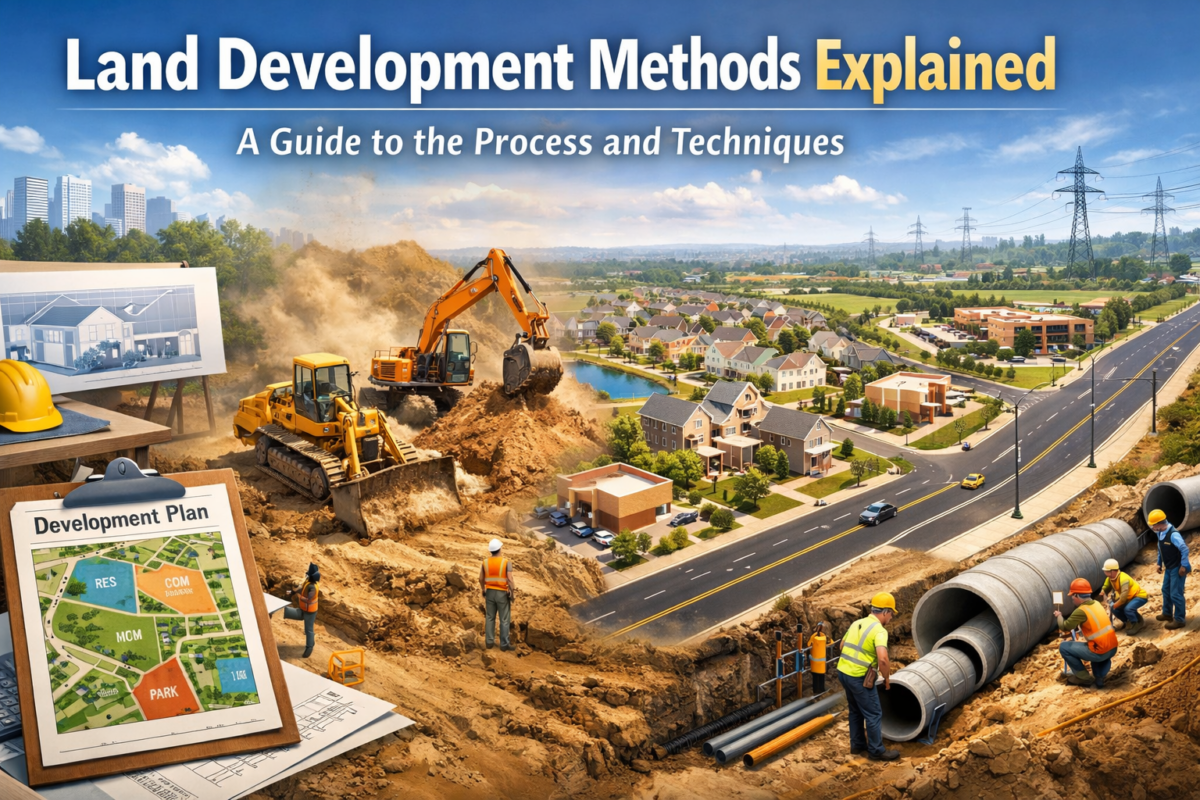
Land Development Methods Explained: A Guide to the Process and Techniques

Turning raw land into a residential neighborhood takes time. It’s not quick. It’s not simple. And it rarely goes exactly as planned.

It takes clear planning, steady decision-making, and the right people involved at the right time. Residential engineering Professionals play a big role here. They handle the technical details that keep a project moving forward.

If you own land, plan to invest, or want to build housing, understanding the land development process helps you avoid mistakes. It also helps you know what to expect. This guide breaks down the main land development methods and explains how each step works.

What Is Residential Land Development?

Residential land development means getting land ready for homes. That includes planning roads and lots, setting up utilities, handling drainage, and meeting local and environmental rules.

The goal is simple. Create a safe place where people can live. But the work behind that goal is detailed. Many steps depend on solid engineering services.

Steps in the Land Development Process

Key Steps in the Land Development Process

Here’s how undeveloped land becomes ready for home construction.

1. Initial Site Evaluation

Everything starts with the land itself. This step looks at what the site can handle. It usually includes:

  • Zoning rules
  • Land slope and shape
  • Soil conditions
  • Utility access

This review helps catch problems early, before costs add up.

2. Feasibility Study

Next comes the big question. Does this project make sense?

A feasibility study looks at cost, layout, and limits. It answers questions like:

  • Can the land be developed within budget?
  • What type of housing fits the site?
  • What approvals are needed?

This step helps decide whether to move forward or adjust the plan.

3. Planning and Design

Once the site checks out, planning begins. A land development design company prepares layouts for roads, lots, utilities, and drainage.

Residential engineering work is central here. It often includes:

  • Stormwater planning
  • Water and sewer design
  • Grading and drainage plans

Good design at this stage prevents problems later.

4. Permitting and Approvals

Before construction starts, local agencies must approve the plans. This means submitting drawings and permit applications for:

  • Land disturbance
  • Utility installation
  • Environmental protection

Clear plans help keep this stage moving.

5. Construction and Site Development

After approval, site work begins. This phase includes:

  • Clearing and grading
  • Installing roads and utilities
  • Preparing lots for homes

Environmental rules still apply during this stage and must be followed closely.

6. Final Inspections and Handover

Once site work is complete, inspectors review the project. If everything meets local standards, the site is approved for home construction.

The Role of Residential Engineering

Residential engineering supports the project from start to finish. Engineers design the systems that make a neighborhood work. Roads. Drainage. Water. Sewer.

Their work helps keep the project functional, compliant, and within budget. A land development design company with strong engineering experience helps keep decisions practical and grounded.

Professional Land Development

Why Work With a Professional Land Development Design Company?

Land development has many details. Missing one can cause delays or extra costs.

A professional firm that offers land development services can:

  • Manage permits and approvals
  • Create designs that are practical to build
  • Help keep the project moving forward

The right team reduces risk and confusion.

Need Expert Help? Talk to Atlas Engineering

If you’re planning a residential land development project, Atlas Engineering can help guide the process. The team has experience in residential engineering and land development design.

Whether the project is small or large, the focus stays the same. Clear planning. Steady support. Reliable results.

Leading Engineering Services in Utah & Idaho

For 20 years, Atlas Engineering has been a leader in land development, structural, municipal, and surveying projects

Frequently Asked Questions (FAQs)

1. What are land development services?
They include site review, planning, engineering design, permitting, and construction support.

2. Why hire a land development design company?
They understand local rules and engineering needs. This helps reduce delays and design issues.

3. What does residential engineering involve?
Residential engineering focuses on roads, drainage, water systems, and sewer systems for housing projects.

4. How long does residential land development take?
Most projects take 6 months to 2 years, depending on size and approvals.

5. What is included in a feasibility study?
Zoning, soil conditions, utilities, land slope, and environmental factors.

6. Does a land development design company handle permits?
Yes. Most firms manage permit applications and agency coordination.

7. What are the main phases of land development?
Site review, feasibility study, planning and design, permitting, construction, and inspections.

8. Can residential engineering reduce costs?
Yes. Good engineering helps avoid rework and delays.

9. What should I look for in a design company?
Experience, local knowledge, and full land development services.

10. Is residential engineering needed for small projects?
Yes. Even small sites need proper planning and code compliance.


×

We are in the process of building our new website. More information is coming soon! If you'd like to be notified when other pages are live, subscribe here