
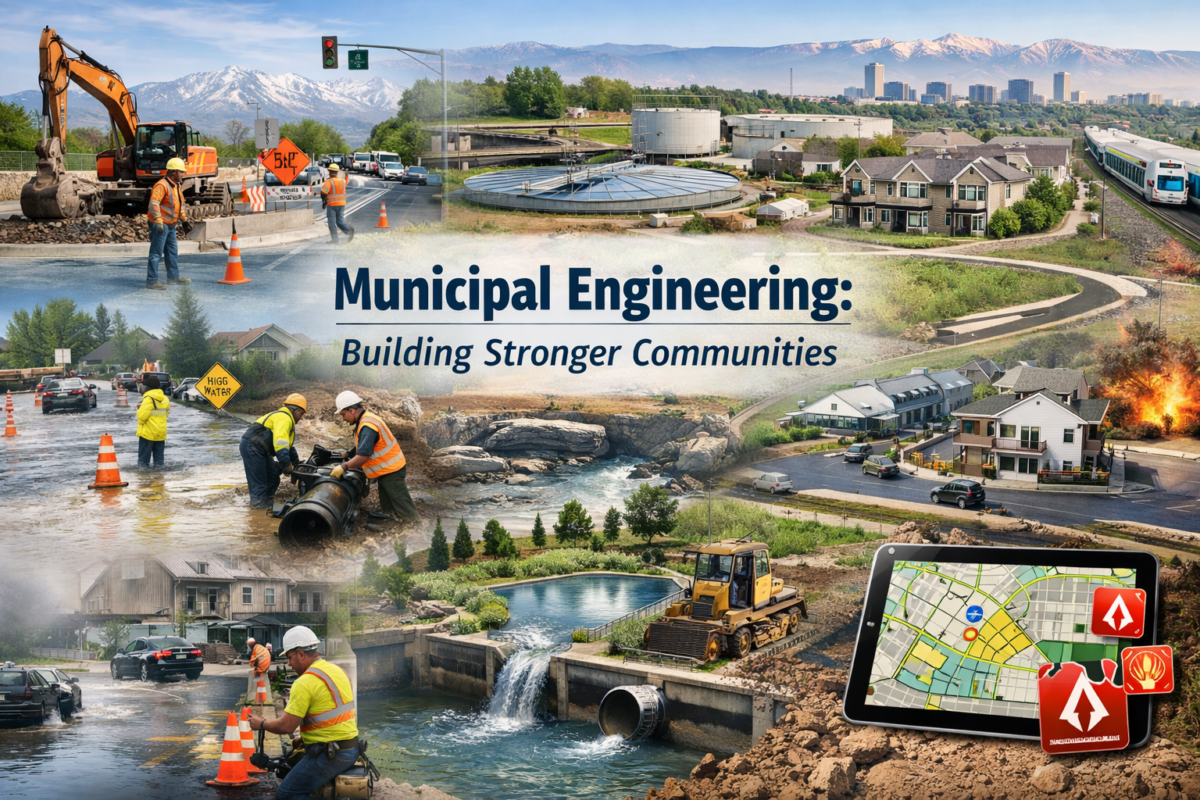
Life in Utah and Idaho moves fast. New neighborhoods go up, traffic patterns change, and cities keep expanding. But none of that works without the basics safe roads, clean drinking water, working sewer systems, and storm drainage that can handle heavy weather.
Most people don’t notice these systems when they’re doing their job. You notice them when they’re not. A flooded intersection. A broken water line. A road that feels unsafe. A new development that creates daily traffic backups.
That’s where municipal engineering comes in.
Municipal engineering is the part of civil engineering that helps cities and towns plan, build, and maintain the infrastructure people use every day. It’s practical work that keeps communities running and helps them grow in a way that makes sense.

What Municipal Engineers Actually Do
Municipal engineering covers a lot, but the goal stays the same: make sure the city works the way it should. Here are some of the main areas.
Transportation Engineering
- Roadway Design
Road design isn’t just drawing lines on a map. Engineers look at how people drive, where they turn, where pedestrians cross, and how bikes fit into the same space. They plan highways, local streets, intersections, sidewalks, and bike lanes, so travel feels safer and smoother.
- Traffic Engineering
If an area has constant backups or frequent accidents, traffic engineering helps fix it. Engineers study how traffic flows and improve things like signal timing, signage, turning lanes, and crosswalks. Some cities also use ITS (intelligent transportation systems) to manage traffic more efficiently.
- Public Transportation Planning
Public transit only works when it’s planned well. Municipal engineers support the design of bus routes, light rail plans, and bike-sharing options. They also help connect those options with walking and cycling paths so people can actually use them without hassle.
Water Resources Engineering
- Water Supply Systems
Clean water has to be treated, stored, and delivered to thousands of homes and businesses every day. Municipal engineers help design water treatment plants, storage tanks, and distribution pipelines. They also plan for water conservation and future demand, which matters a lot in the West.
- Wastewater Treatment
Wastewater treatment keeps sewage out of rivers, lakes, and groundwater. Engineers plan and support treatment facilities that handle daily use from homes, businesses, and industrial sites. It’s not glamorous work, but it’s one of the most important parts of public health.
- Stormwater Management
Stormwater is a bigger issue than most people realize. One heavy storm can flood streets, damage property, and carry pollutants into nearby waterways. Municipal engineers design storm drains, detention ponds, and green infrastructure like rain gardens and bioswales to manage runoff and reduce flooding.
Site Development

- Subdivision Design
When a new neighborhood is built, the layout matters. Municipal engineers design streets, utilities, drainage, and public spaces, so the area works long-term-not just on move-in day.
- Commercial and Industrial Development
Shopping centers, warehouses, and industrial sites create different demands than housing. Engineers help plan parking, truck access, stormwater control, and utility connections, so these developments fit the area and don’t create problems for nearby roads or neighborhoods.
- Land Development
Municipal Engineering Services also help connect new growth to what already exists. If a city grows faster than its infrastructure, problems show up quickly. Good land development planning helps prevent that by thinking ahead about water, sewer, roads, drainage, and environmental impact.
GIS (Geographic Information Systems)
- Data Management
Cities have miles of pipes, roads, and utility lines. GIS helps track where everything is and what condition it’s in. Engineers use GIS to build accurate maps and databases so cities can plan repairs and upgrades with better information.
- Planning and Decision-Making
GIS is also useful for planning. It helps identify high-growth areas, problem intersections, flood-prone zones, and infrastructure gaps. That makes decision-making clearer and reduces guesswork.
Emergency Preparedness and Disaster Response
- Hazard Mitigation
Utah and Idaho face real risks from flooding and wildfires to earthquakes. Municipal engineers help cities reduce damage by identifying vulnerable areas and planning upgrades that improve resilience.
- Emergency Response Planning
When an emergency happens, cities need a plan for how to keep essential systems running. Engineers help build response plans for critical infrastructure like water supply, road access, and drainage systems so recovery is faster and more organized.
Why Municipal Engineering Matters
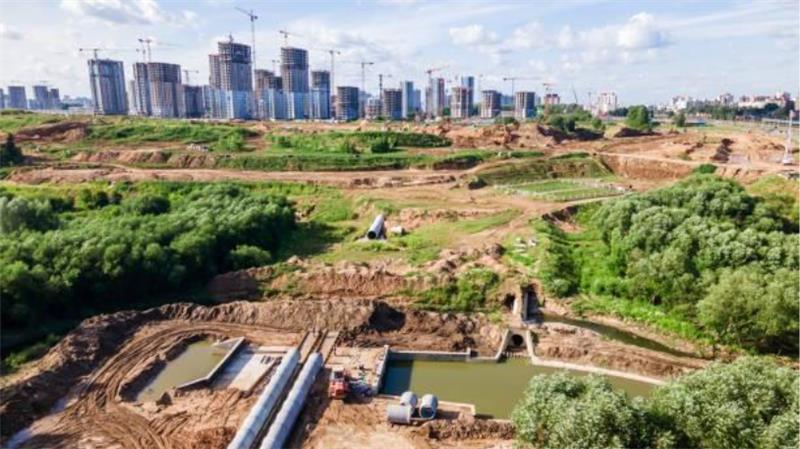
Municipal engineering isn’t just about big projects. It affects daily life in small ways that add up fast.
- Better Infrastructure
When infrastructure is planned and maintained well, things work like they should. Roads feel safer. Traffic flows better. The water stays clean. Drainage systems handle storms without flooding neighborhoods.
- Stronger Public Safety
Good road design reduces accidents. Reliable water and sewer systems protect public health. Stormwater planning lowers flood risk. These aren’t “extra” improvements, they’re essential.
- Smarter Growth
Cities in Utah and Idaho continue to grow, and growth need’s structure. Municipal engineering helps communities expand without putting too much stress on existing roads, utilities, and public systems.
- Long-Term Value
Cities that invest in infrastructure usually see long-term benefits. Property values improve, businesses feel confident investing, and communities stay more stable over time.
Conclusion
Municipal engineering is what keeps a community working behind the scenes. It supports the roads people travel on, the water they drink, the drainage that protects neighborhoods, and the planning that helps cities grow without constant problems.
At Atlas Engineering, we work with municipalities across Utah and Idaho to help plan, improve, and maintain the infrastructure communities rely on every day. If your city needs support for an upcoming project or long-term planning, we’re here to help with clear, practical engineering guidance.
Start Your Project
FAQs
1. Why do road projects feel like they take forever?
Because it’s not just paving. Cities have to check traffic flow, safety, storm drainage, underground utilities, permits, and construction timing. A lot happens before the first cone shows up.
2. What causes flooding in areas that are never used to flood?
Most of the time, it’s growth. More pavement means less ground to absorb water. If storm drains and runoff systems don’t get upgraded, water builds fast during heavy storms.
3. How do cities know when it’s time to replace old water or sewer lines?
Usually when issues start happening more often, leaks, low pressure, backups, or repeated repairs. Many cities also use inspections and mapping tools to track aging infrastructure before it fails.
4. Can a new development mess up traffic in nearby neighborhoods?
Yes, it can. Even one new shopping center or subdivision can change traffic patterns. That’s why municipal engineering firm review access points, turning lanes, signal needs, and road capacity before construction starts.
5. What does GIS do in simple terms?
Think of GIS as a “map with real information.” It helps cities see exactly where roads, pipes, and utility lines are, track what conditions they’re in, and plan upgrades without guessing.